
In 2026, your website is not just a digital brochure — it is the first, and often the most critical, touchpoint in your customer's journey. Research from Stanford University found that 75% of people judge a company's credibility based purely on its website design. That judgment happens in the first 50 milliseconds of landing on your page — before a single word is read, before a single product is viewed. Design is not decoration. It is business strategy made visible.
The web design landscape is evolving faster than ever, driven by advances in AI, changing user expectations shaped by world-class consumer applications, and a deeper understanding of the psychology of conversion. Here are the trends and principles that define excellent web design in 2026 — and that separate businesses generating consistent online revenue from those watching their bounce rates climb.

Trend 1: AI-Personalised Web Experiences
The era of one-size-fits-all websites is ending. In 2026, leading businesses are deploying websites that dynamically personalise the experience for each visitor based on their behaviour, location, referral source, and stage in the buying journey. A first-time visitor from an Instagram ad sees a page emphasising social proof and problem-solution messaging. A returning visitor who browsed your pricing page sees a targeted offer or a "continue where you left off" prompt. A visitor from a specific city sees location-relevant content and testimonials.
AI personalisation tools — many of which are now accessible to mid-market businesses, not just enterprise companies — make this level of customisation achievable without building custom technology from scratch. The result is dramatically higher engagement, longer session times, and significantly improved conversion rates.
Trend 2: Bold, Typographic-Led Design
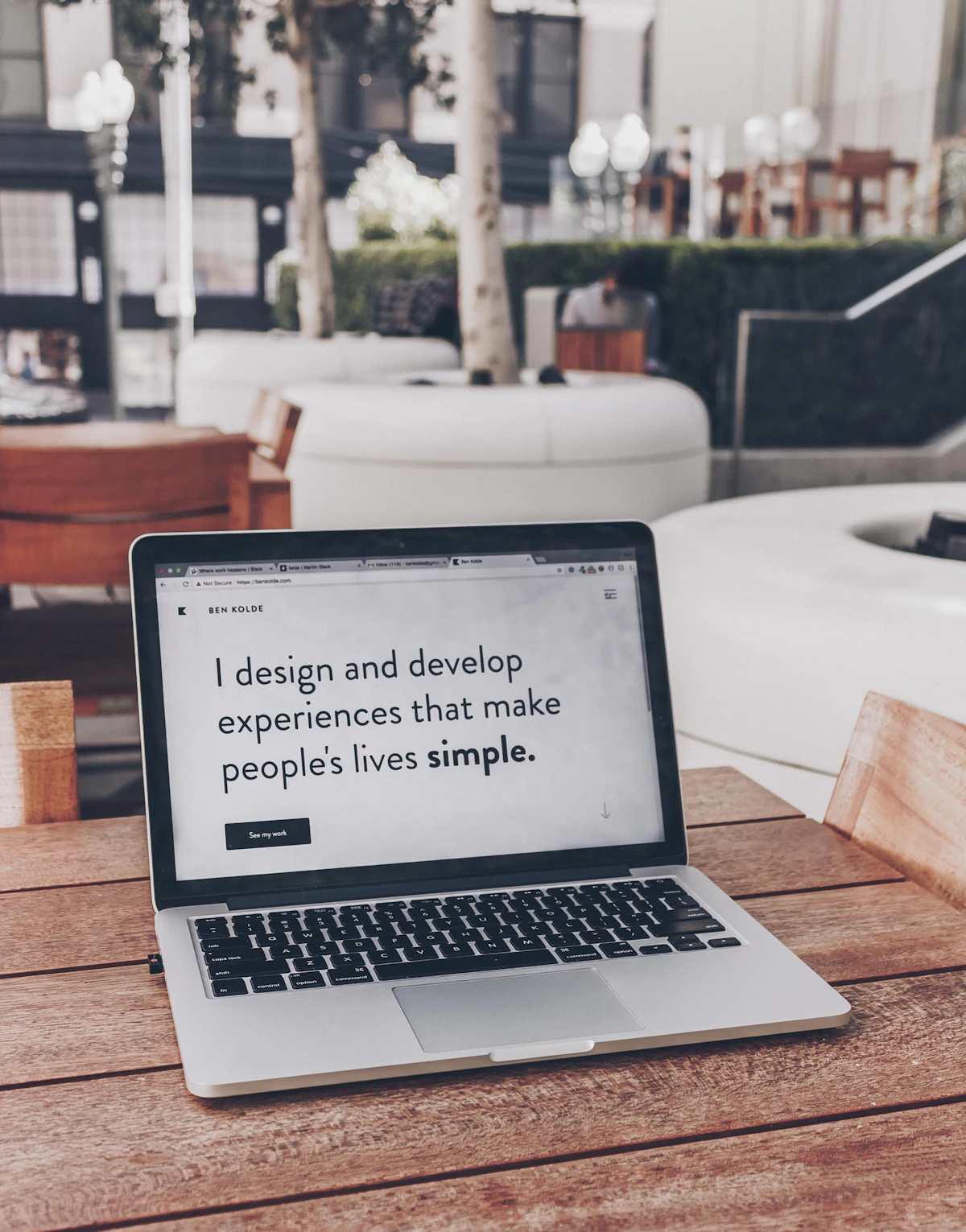
2026 is the year that typography finally claimed its rightful place as a primary design element — not just a container for words, but a visual statement in itself. Oversized headlines (80–120px on desktop), dramatic font pairings that combine a sharp serif with a geometric sans-serif, and kinetic text animations that react to scroll position are defining the visual language of the year's best websites.
This trend is powered by a growing library of high-quality variable fonts and advances in CSS animation capabilities. When typography is confident enough, you do not need a hero image — the text IS the hero. This approach also has practical advantages: text-based heroes load faster than full-screen image or video backgrounds, and the content is naturally more accessible to screen readers and search engine crawlers.
Trend 3: Glassmorphism and Layered Depth
The frosted glass aesthetic — semi-transparent elements with backdrop blur effects, layered against rich gradients or dark backgrounds — has matured from a novelty into a refined and widely deployed design language. When used with restraint and intentionality, glassmorphism creates an immediate sense of premium quality, depth, and modernity that resonates strongly with both B2B and B2C audiences.
The key to using glassmorphism effectively is dosage. Apply it to specific UI elements — cards, modals, navigation bars, testimonial sections — rather than using it for everything on the page. Pair it with subtle drop shadows, thin border strokes, and carefully chosen colour palettes (deep blue-blacks, rich purples, warm charcoals work best) for maximum impact.
Trend 4: Purposeful Micro-Animations
Micro-animations are small, targeted animations triggered by user interactions — a button that subtly scales on hover, an input field border that smoothly transitions to an accent colour on focus, a card that lifts with a shadow when the cursor approaches, elements that animate into the viewport as the user scrolls. Done with purpose and restraint, these micro-animations serve a functional role: they communicate system feedback, guide user attention, and create a sense that the interface is alive and responsive.
The 2026 standard for micro-animations is defined by three principles: they should be fast (150–300ms is the sweet spot for feedback animations), they should be intentional (every animation communicates something meaningful, not just "look at this"), and they should be consistent (animations across the site should follow the same timing curves and movement vocabulary).

Trend 5: Dark Mode as Primary Design
While light-mode and dark-mode toggles remain common, a growing number of the most aesthetically acclaimed websites in 2026 default to — or are exclusively designed in — dark mode. Dark backgrounds paired with vibrant accent colours create contrast and drama that light designs struggle to match. They also appeal powerfully to technology-oriented audiences and create an immediate perception of modernity and sophistication.
Trend 6: Conversion-Centred Architecture (The Most Important Trend)
Beneath all the visual trends, the most significant shift in web design philosophy in 2026 is the prioritisation of conversion architecture — designing every element, section, and interaction specifically to guide visitors toward a desired action. This means: a single, dominant value proposition above the fold; a primary CTA that appears at multiple points throughout the page; social proof strategically placed at the exact moments where visitor doubt is highest; friction aggressively eliminated from every conversion pathway; and visual hierarchy that makes next steps obvious.
A website can be visually breathtaking and still fail commercially if it does not generate enquiries, leads, or sales. The best web design teams in 2026 are those who combine aesthetic excellence with a deep understanding of buyer psychology and conversion engineering.
Build Your 2026-Standard Website With Widen Digital
At Widen Digital, our web development team combines all of these design principles with serious technical engineering — fast load times, flawless mobile experience, clean SEO structure, and conversion-optimised layouts. Every website we build is a business tool designed to generate measurable returns. Contact us today to discuss your project and see what we can build for you.


